

Sensory bin filler ideas are at the heart of engaging and safe sensory play, but not all fillers are created equal—especially for young toddlers. If you want actionable, up-to-date advice for 2026, this is your complete guide: practical, risk-aware, and designed for real homes.
Key Takeaways
- Taste-safe fillers are essential for 1-year-olds. Avoid any small or toxic items to reduce choking risk.
- Constant supervision and clear cleanup routines are a must; water beads and raw beans are dangerous for the mouthing stage.
- Creative sensory bin themes like “beach,” “forest,” and “car wash” are underrated but deliver high engagement—try these at home.
- Understanding Sensory Bin Filler Ideas: The Essentials
- Step-by-Step Guide: Safe and Creative Filler Setup
- Advanced Analysis & Common Pitfalls
- Conclusion
- FAQ
Understanding Sensory Bin Filler Ideas: The Essentials
Sensory bin fillers are the materials that create touch, sound, and even smell experiences inside a simple container—fueling open-ended discovery for kids. Why does this matter? Sensory play promotes cognitive and fine motor development, especially for under-twos, but only if you choose age-appropriate, taste-safe fillers and follow current safety practices.
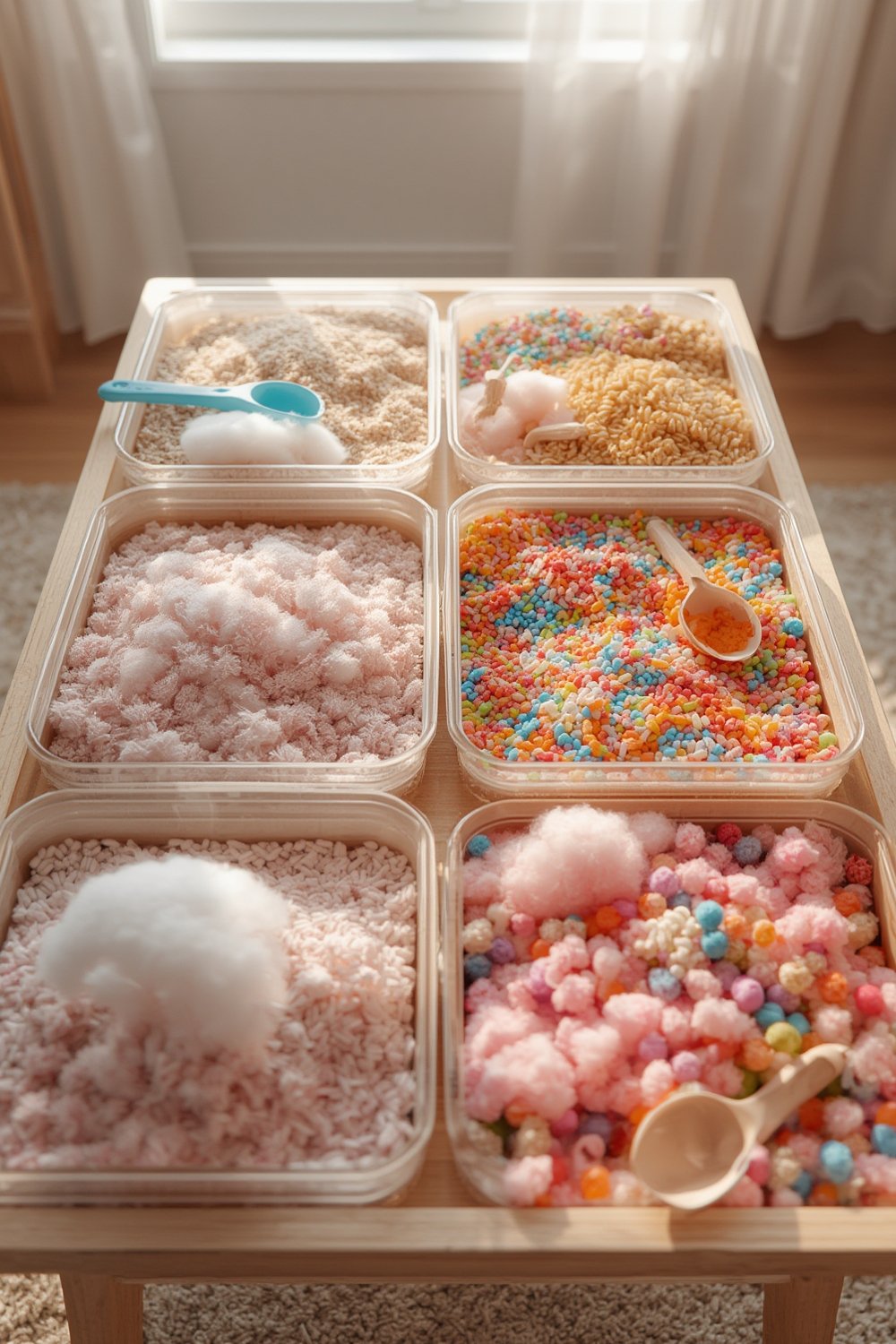
In 2026, pediatric guidelines and occupational therapists recommend sticking to simple bases like dry oats, cooked pasta, cold water, yogurt, and ice for toddlers—particularly those around 12 months who mouth everything. Supervision, allergy awareness, and avoiding dangerous fillers (like water beads and raw beans) are now non-negotiable. Even “classic” fillers like rice or flour require moderation and vigilant monitoring due to ingestion and allergy risks.
Sensory bins work best with household items and themes that invite safe, multi-sensory exploration. Simple additions—like scoops, measuring spoons, or theme props—boost both engagement and learning.
Want to see more age-specific activity ideas? Check out our messy play for toddlers and fine motor skill games guides.
Step-by-Step Guide: Safe and Creative Filler Setup
- Pick the Right Container
Any shallow plastic bin or table works, as long as it’s easy to wash. Choose a size that fits your child’s reach—nothing so high they have to climb or reach awkwardly. - Choose Safe, Age-Appropriate Fillers
For babies around 1, stick with taste-safe, large-item fillers such as:- Cooked pasta (cooled, no sauce)
- Oats (dry or cooked, depending on desired texture)
- Yogurt (unsweetened, if non-allergic)
- Cold water or ice (great for summer play)
Always verify allergy risks (especially with gluten or dairy). Avoid anything smaller than a Cheerio to minimize choking hazards, per current safety guidelines.
- Theme It for Maximum Engagement
Underrated themes that work for a range of ages:- Beach Sensory Bin: Use clean kinetic sand, large shells, and ocean-sound shakers.
- Forest Floor Bin: Fill with pinecones, chunky leaf shapes, and safe scented pouches.
- Car Wash Bin: Add sponge pieces to a shallow water bin and include large toy cars for scrubbing.
These themes are rarely covered in top-ranking lists but get high marks for fun and learning in sensory play communities (Caterpillar Care).
- Prep the Play Area
Cover the floor with a washable mat. Keep wipes or towels close, and have a laundry basket ready for dirty clothes. Dress children in play clothing or aprons. - Set Expectations
Before beginning, set clear rules: “Hands stay in the bin,” and never leave a child unattended, even for a few seconds. Encourage your child to explore different textures and watch for any mouthing behavior.
Remember: Many of the best fillers are found in your own kitchen. If you’re feeling stuck, our guide to budget sensory play ideas has more alternatives.
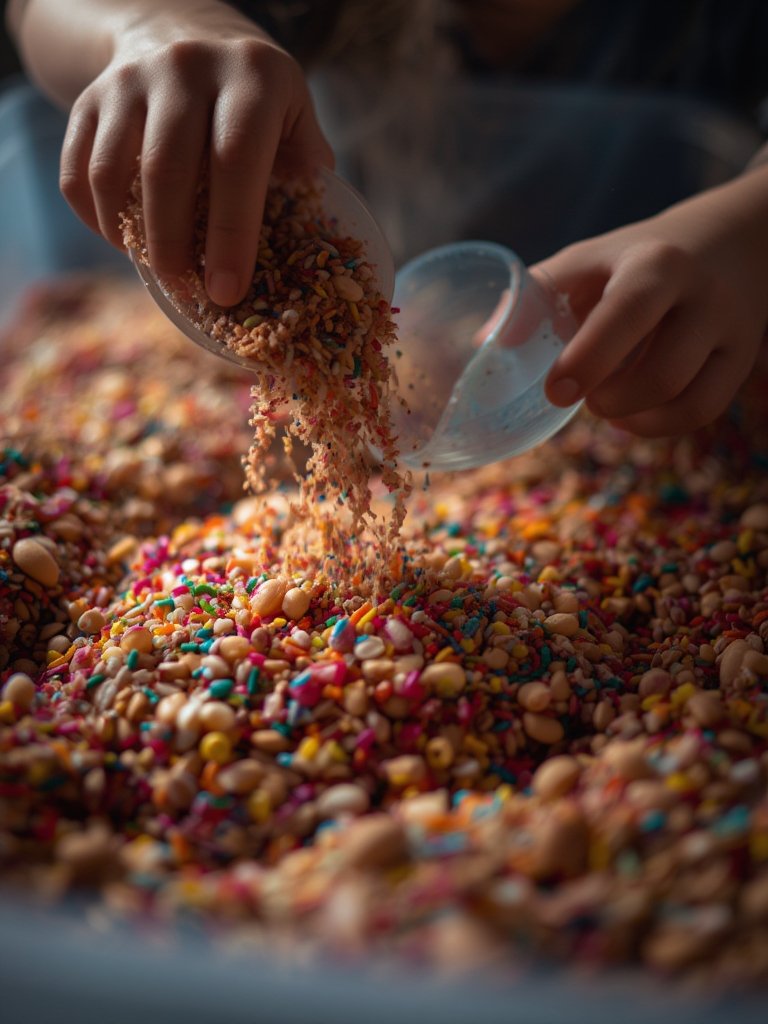
Need even more themed inspiration? Try a simple oats and scoop station, or fill bottles with glitter and water for a mess-free variation—an idea also shared by child development experts.
Advanced Analysis & Common Pitfalls
No sensory bin is completely “set and forget”—here’s what to watch out for, plus a head-to-head look at popular filler options.
- Choking Hazards: Anything smaller than a Cheerio poses risk, especially for 1-year-olds. Water beads are extremely risky even for older toddlers and can be fatal if swallowed (see data). Raw beans are also toxic and can cause severe illness if eaten.
- Allergies & Sensitivities: Watch for gluten (in flour, oats), dairy (in yogurt), or even environmental allergies triggered by natural materials. Always check new fillers for reactions.
- Mess & Cleanup: Wet fillers (like cooked pasta or yogurt) are harder to contain, spoil quickly, and must be tossed after play. Dry fillers scatter fast, so keep levels low and bins covered between uses.
- Supervision Fatigue: Sensory bins require constant oversight—expect to step in frequently to redirect mouthing or spilling, especially with children under 2.
- Durability & Cost Considerations: Not all fillers are created equal for repeat use. See comparison below.
Want further tips? Our how to clean sensory toys guide breaks down daily maintenance.
| Filler | Taste-Safe? | Reusable? | Mess Level | Allergy Risk | Estimated Cost |
|---|---|---|---|---|---|
| Cooked Pasta | Yes | No (single use) | High (wet, slippery) | Wheat/Gluten | Low |
| Dry Oats | Yes | Yes (if kept dry) | Medium | Gluten/Grain | Low |
| Kinetic Sand | No | Yes (proper storage) | Low | Possible (store-bought additives) | Medium-High |
| Water Beads | No (dangerous) | No (avoid for under 4) | Medium | Possible chemical risk | Low |
| Yogurt | Yes | No | High (sticky) | Dairy | Low |
| Rice (dry) | Yes (with supervision) | Yes | Medium | Grain | Low |
In short: cooked pasta, dry oats, and ice are safe for the youngest, but require more work after each session. Kinetic sand lasts longest, but isn’t suitable for the mouthing stage. Want help building a bin on a budget? See our article on DIY sensory table vs store-bought for real-world cost insights.
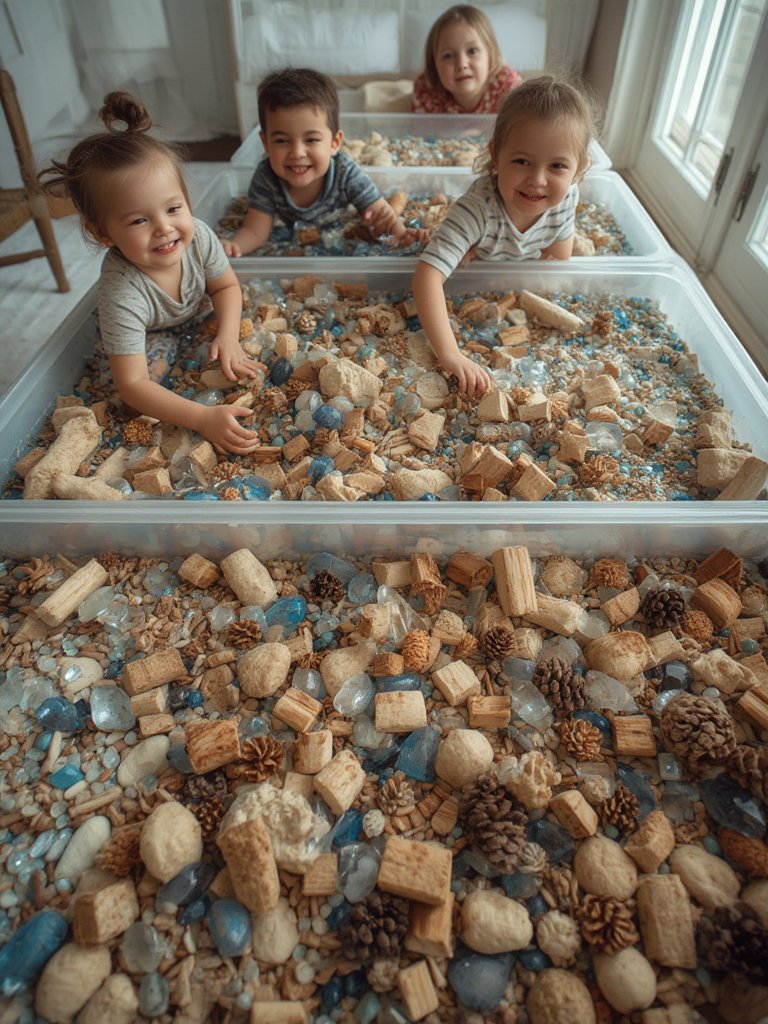
Looking for professional opinions on filler safety? While there’s no universal “certification” for homemade bins, taste-safe materials and vigilant supervision are the standards supported by occupational therapists and pediatricians (Inventors of Tomorrow).
Conclusion
Selecting sensory bin filler ideas in 2026 means balancing child safety, engagement, and clean-up realities. For toddlers—especially if they’re under two—taste-safe fillers like oats, cooked pasta, or ice combined with hands-on themes offer the best mix of fun and peace of mind. Always supervise, adjust for allergies, and skip dangerous or trending materials like water beads. Ready to create your own bin? Start with one of our unique theme ideas above, and share your child’s favorite activity with us.
Want more actionable tips? Dive into our mess free sensory play hacks or join our newsletter for weekly activity inspiration.
FAQ
What are the safest sensory bin fillers for 1-year-olds?
Stick with taste-safe, non-toxic options such as cooked pasta, dry or cooked oats, yogurt (if no dairy allergy), and fresh water or ice. Avoid any filler smaller than a Cheerio and never use water beads or raw beans.
Are there any certifications for sensory bin fillers?
No official certification exists for homemade sensory bin fillers. However, using only food-grade ingredients and following pediatric safety advice (constant supervision, no choking hazards) is considered best practice.
How do you minimize the mess from sensory bin play?
Lay down a washable mat or towel, limit the amount of filler, and have wipes on hand. Use smocks or play clothes, and confine play to an easy-clean area like the kitchen or bathtub (without water).
Why are water beads not recommended for toddlers?
Water beads are a serious choking hazard and can be fatal if swallowed, especially for toddlers who tend to mouth objects. Most pediatricians now advise completely avoiding water beads for children under 4.
What are some creative sensory bin themes I can try at home?
Try underrated bins like beach (sand, large shells, ocean sounds), forest (pinecones, fake leaves, scents), or a car wash (water, sponges, toy cars). All can be done safely with taste-safe or large, non-toxic items.