


### Blog Post:
Executive function toys for kids promise to help children build essential self-management skills. Parents, teachers, and therapists look for these tools hoping for real improvements in planning, impulse control, and self-regulation. But how well do these toys really work, what should you watch out for, and how do you make smart choices as a parent? This guide has the answers.
Key Takeaways
- There is no direct clinical evidence from the last 5 years proving physical executive function toys alone significantly improve planning or impulse control in children.
- Digital-based games and exergaming show some benefits for executive function, especially for neurodiverse kids, while physical toy research lags behind.
- Parents should focus on engagement, observed behavior change, and durability — not marketing claims or assumed cognitive benefits — when choosing executive function toys for children with ADHD or EF challenges.
Table of Contents
- Understanding Executive Function Toys
- How to Effectively Use Executive Function Toys
- Advanced Analysis and Common Pitfalls
- Conclusion
- FAQ: Executive Function Toys
Understanding Executive Function Toys
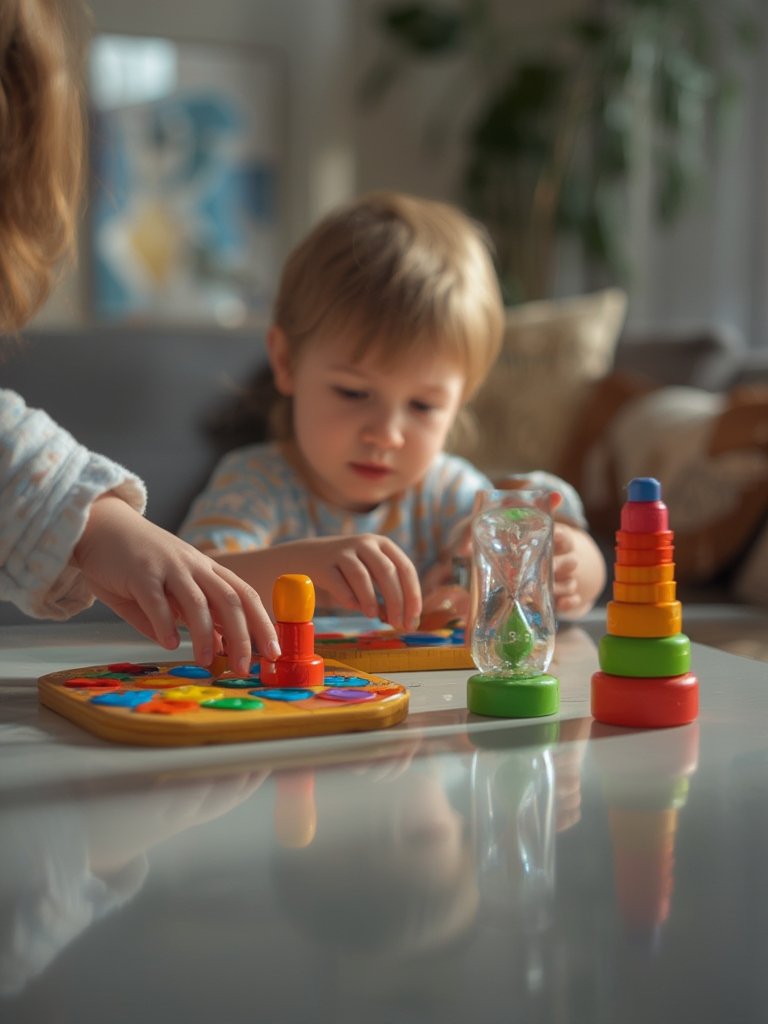
Executive function toys are designed to help children build core cognitive skills like working memory, flexible thinking, and self-control. Popular examples include board games for ADHD kids that require turn-taking, memory-matching cards, and hands-on logic puzzles. The idea is that by practicing these skills through play, kids can transfer them to real-life situations.

However, a recent review of peer-reviewed research shows that there have been no clinical studies in the last five years directly proving that physical, non-digital executive function toys can reliably improve planning, self-regulation, or impulse control in children. Instead, most robust gains have been seen in studies of Digital-based games or “exergaming” (active video games), especially for children with ADHD or autism. These digital interventions can support attention, working memory, and cognitive flexibility — but physical toys haven’t been rigorously validated in similar ways (source).
Still, executive function toys remain extremely popular. Many parents and educators trust their ability to engage children in learning while practicing patience, following rules, and making plans. Board games for ADHD kids and fidget toys for focus have earned dedicated followings, in part because they are affordable, reusable, and immediately accessible at home or in classrooms.
How to Effectively Use Executive Function Toys
If you want to use executive function toys at home or in therapy, start with an intentional plan. Here’s a realistic way to maximize their potential, even if clinical evidence is still evolving:
- Identify Your Child’s Needs: Is impulse control the biggest challenge, or is it planning, memory, or flexible thinking? If your child struggles with waiting, try games that require turn-taking or delayed gratification (such as “Simon Says” or “Jenga”).
- Choose Toys Thoughtfully: Don’t get caught up in marketing claims. Select toys that naturally involve rules, memory, and decision-making. Examples include timer-based attention tools, cooperative board games, and memory cards.
- Set Goals, Not Expectations: Since no toy will “fix” executive function, focus on micro-behaviors: Can your child wait their turn more reliably, remember two simple instructions, or organize pieces by color or number? Track and celebrate small wins.
- Supervise and Scaffold: Play together and model appropriate behaviors. Praise regulation (“I love how you waited!”) and help kids think aloud (“What’s your plan?”). Some toys come with social stories or guides — use them to scaffold success.
- Address Frustration and Boredom: Modify the rules or swap out games when your child loses interest. Frustration is normal and can signal when to step back or switch gears. Encourage your child to pick the next activity for a sense of ownership.
- Observe and Reflect: Do you notice improvements over a week or two? Track behaviors using a journal or note app. If you see no changes over time, consider pairing the toys with professional support or trying digital EF apps with more peer-reviewed support.
For more practical ideas, check out our in-depth guide on self-regulation strategies for kids.
Advanced Analysis and Common Pitfalls
It’s natural to want the best for your child, but there are limitations to what executive function toys can do. Here’s what to keep in mind based on current research:
- No Proof of Transformative Gains: No randomized trials show that physical toys alone boost executive function as effectively as digital games or apps. Real improvements tend to come from a combination of practice, social coaching, and structured interventions (details).
- Most Common Parent Complaints: While formal review data is limited, anecdotal feedback points to issues with durability (toys break easily), lack of long-term engagement, and disappointment if cognitive benefits aren’t quickly visible. One digital system, rather than a toy, showed high satisfaction around ease of use but only modest improvements in executive functioning (source).
- Missing Sub-skills: Current toys may not adequately address all executive function skills—especially complex working memory and cognitive flexibility. Most favor inhibition (waiting or turn-taking), but results for memory and flexible thinking are spotty.
- Comparing to Apps and Training: Digital apps and serious games tailored for ADHD or autism have the strongest evidence for meaningful gains in real-world behavior. Physical toy interventions may be less effective alone—consider combining them or using professional EF coaching for best results. For a deeper dive, see our article on ADHD therapy tools for parents.
- Unmet Needs: Many competitor lists skip age-specific recommendations, rarely discuss long-term motivation, and almost never include before-and-after stories or tracked success outcomes. Be wary of lists that only review toys, not actual impacts.
| Factor | Executive Function Toys (Physical) | Digital Apps / Serious Games |
|---|---|---|
| Cost | $7–$45 per toy; reusable, can break over time | $0–$30/month; depends on device and platform |
| Evidence of Effectiveness | No direct clinical proof (2021–2026) | Strong for some EF skills (attention, working memory) in ADHD/autism |
| Parent Complaints | Breakage, repetitive play, unclear benefits | Screen time concerns, subscription fatigue |
| Supported EF Skills | Mostly inhibition (waiting/turn-taking); weak for flexibility/memory | Inhibition, working memory, cognitive flexibility, attention |

Conclusion
Physical executive function toys can support good habits and make learning fun, but parents should be aware of the limits. No widely-accepted clinical studies prove their standalone impact, especially compared to digital tools and structured cognitive training. Choose toys with real-world engagement value, rotate them often, and don’t expect a miracle cure. For the best results, combine executive function toys with supportive routines, professional guidance, and honest observation of your child’s growth.
Want more honest, science-backed strategies? Explore our parental executive function support resources, or reach out for a free guide on making everyday play powerful for real executive function growth.
FAQ: Executive Function Toys
Are there any physical executive function toys proven by science to boost planning or impulse control?
No clinical studies published in the last five years demonstrate that physical executive function toys alone produce measurable improvements in planning or impulse control. Most validated results come from digital or video game interventions.
What executive function skills are least supported by most toys?
Most toys do not focus on cognitive flexibility or complex working memory. They are more likely to address inhibition (waiting, turn-taking) than flexible thinking or memory retention.
Should I choose digital apps over physical toys for executive function practice?
Digital apps and serious games have the strongest evidence, especially for children with ADHD or autism. However, a mix of toys, routines, and apps may yield the best long-term results for your child.
How can I tell if an executive function toy is helping?
Track real-world behaviors: Is your child waiting longer, remembering instructions, or better at switching tasks? Look for small, consistent improvements over time—those matter most.
Where can I find age-specific advice or before-and-after success stories?
Most current reviews lack age-based guides or real-world testimonials. Check out our specialized breakdowns for different ages, such as ADHD board games for kids or ADHD therapy tools for parents.
—